Why Leave Management Is Different in the Security Industry
When an office worker takes leave a meeting moves. When a guard takes leave a post is unmanned and someone works a double. Generic HR software cannot tell the difference.
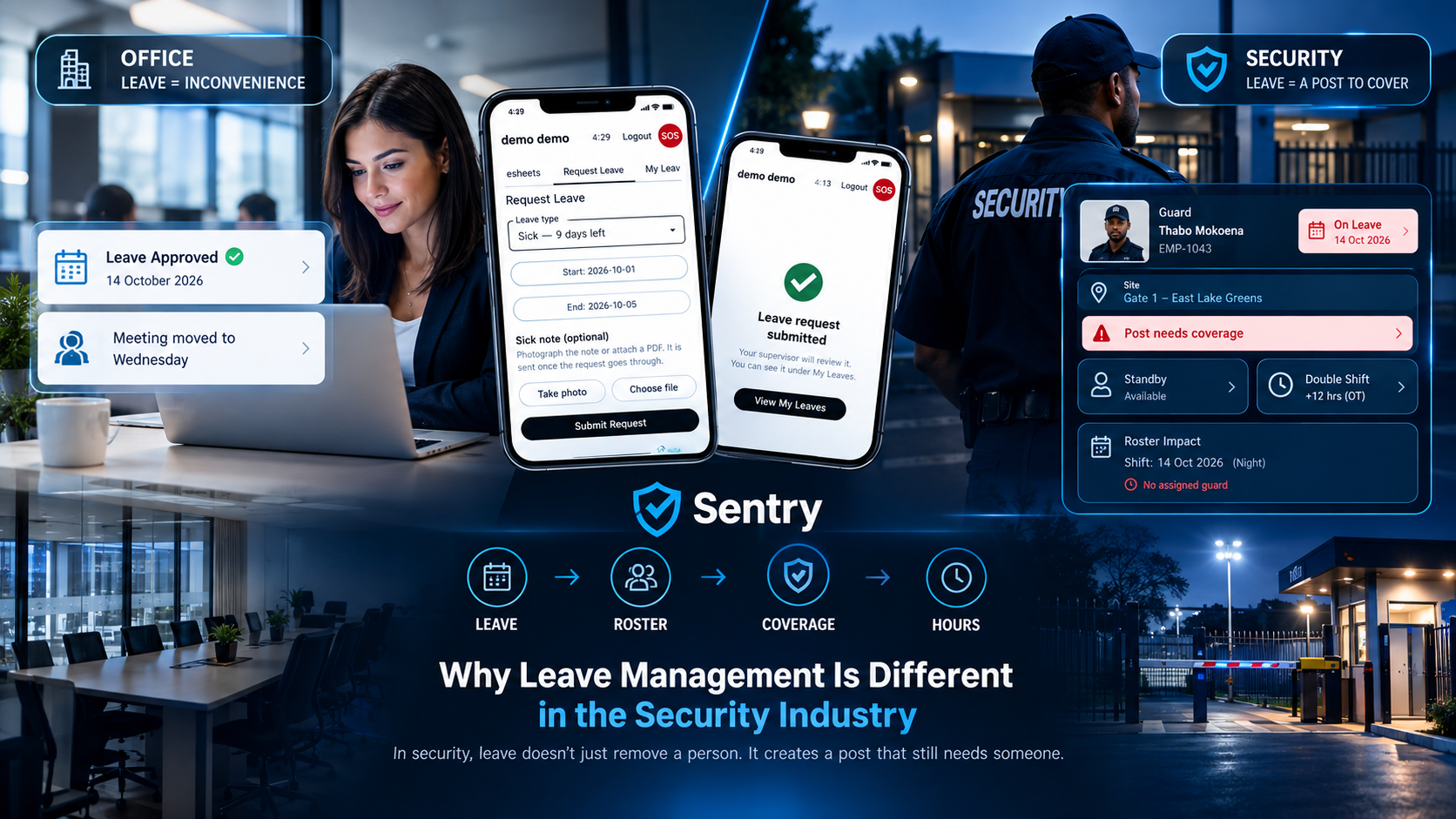
When someone in an office takes leave, a meeting moves. When a guard takes leave, a post is unmanned and somebody else works a double shift. That is why leave management in the security industry starts with the roster.
That difference is why leave management built for offices does not survive contact with the security industry, and why most operators end up running leave on a spreadsheet next to software they are already paying for.
What office leave management software assumes
Every generic HR product is built on the same model. Staff work a standard week. Absence is measured in days. One person being away is an inconvenience to be routed around, and the system's job is to track the balance and route the approval.
None of that describes your business.
Your people work shifts, including nights and weekends. Absence is measured against a specific post on a specific date, not against a working week. And one person being away is not an inconvenience, it is a site with nobody on it, which is a contractual problem within hours.
The approval question is different too. An office manager approves leave based on workload. You approve it based on whether the post can be covered, which is a question about the roster, not about the person asking.
What that means in practice
Leave has to be visible against the roster, not next to it. A request approved in isolation is an approval made without the information that matters. The useful question is not "has this person got days available", it is "if I say yes, who is on that gate on the 14th".
Standby is part of leave, not a separate thing. Approving leave without knowing who is on standby is approving a gap and finding out later. Operators who run this well treat the standby roster as the thing that makes leave possible rather than as a list they maintain separately.
A double is a cost, not a favour. When leave is covered by someone working back to back, that has an overtime cost and a fatigue cost, and both are invisible if leave and hours live in different systems. The operators who get caught out are the ones who discover the overtime at month end, after the invoice has gone.
Shift patterns break balance arithmetic. A day of leave for someone on twelve hour shifts is not the same quantity as a day for someone on eight, and a system that counts days rather than hours will drift. It drifts quietly, in your employees' favour or yours, and either way somebody eventually notices.
How Sentry handles it
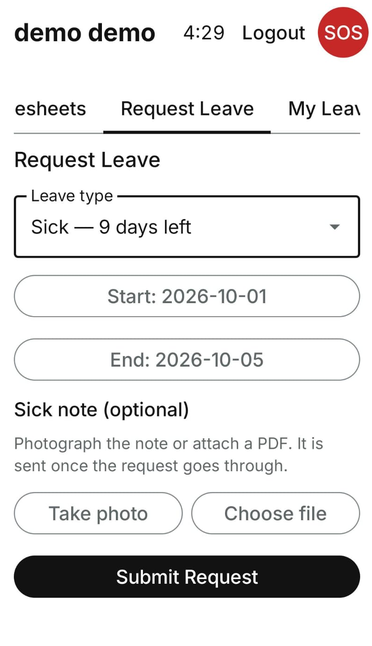
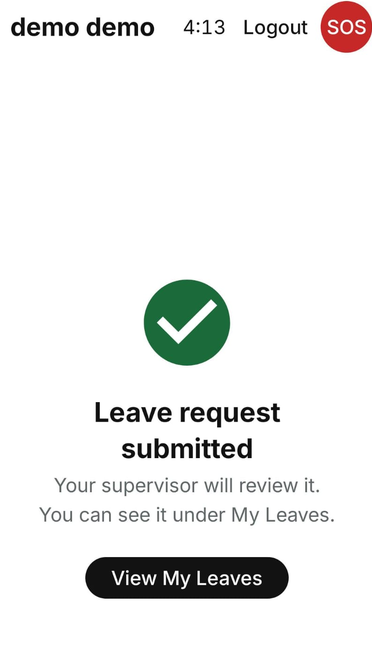
Leave sits in the same system as the roster and the timesheets, so an approval is made with the coverage visible, and the cost of covering it lands in the same place as the hours it affects. If you have already approved leave in Sentry and you are busy scheduling your staff, Sentry will let you know which staff are on leave and when they come back and auto adjust the scheduling to count for you staff who might be out on sick leave or any other type,
Standby rosters are first class rather than a note. Shift handovers are recorded, so a double worked to cover leave is a recorded fact rather than something a supervisor remembers.
Because hours come from actual clock-ins rather than from the plan, the overtime created by covering leave appears where you can see it during the month rather than at the end of it.
Related: the roster survived until Tuesday, and what happens next.